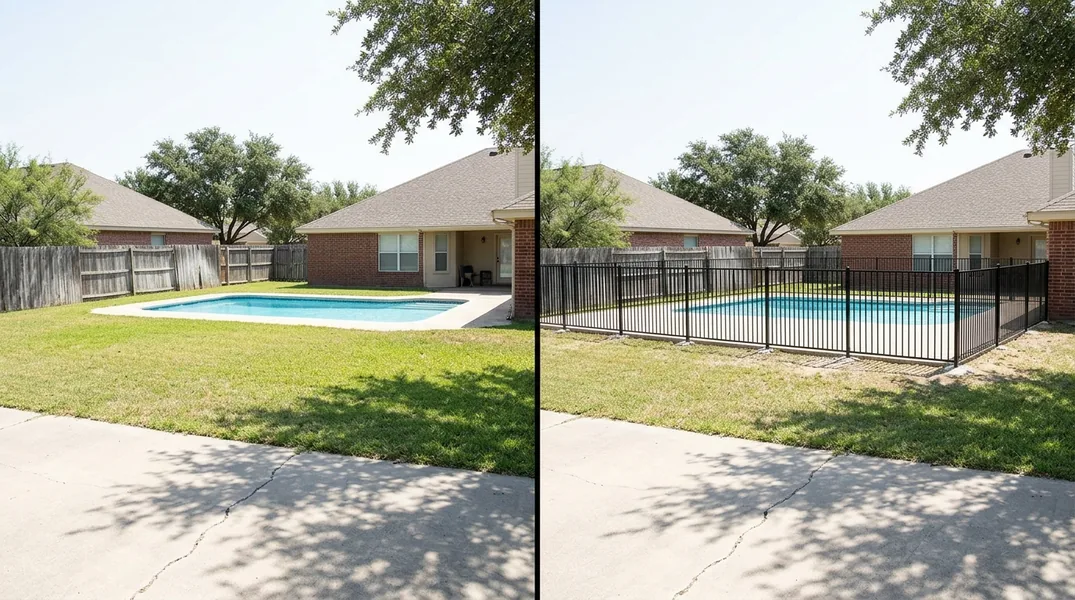
Understanding Texas Pool Fence Code Requirements
If you're a homeowner in Laredo with a swimming pool, understanding the legal requirements for pool fencing isn't optional, it's essential. Texas has specific regulations designed to prevent accidental drowning and ensure the safety of children and pets around residential pools. These codes are enforced at the state level and often supplemented by local municipal ordinances, so it's critical to know what applies to your property before you begin any installation project.
The Texas Health and Safety Code establishes minimum standards for pool barriers, and Laredo homeowners must comply with these statewide rules regardless of neighborhood or property size. Failure to meet these requirements can result in fines, liability issues if someone is injured on your property, and complications when selling your home. Whether you're planning a new pool installation or upgrading an existing barrier, working with a knowledgeable fence contractor who understands these codes is the safest approach. At Laredo Fence, we specialize in helping homeowners navigate these regulations and install compliant barriers that protect families while enhancing your outdoor space.
Pool Fence Height Requirements in Texas
One of the most frequently asked questions we receive is about pool fence height requirements. In Texas, the standard requirement is that any barrier surrounding a pool must be at least 4 feet tall, measured from the ground level on the pool side of the fence. This height is designed to prevent young children from easily climbing over or accessing the pool area without supervision. The fence must be constructed in a way that prevents gaps or openings that could allow a child to squeeze through or under the barrier.
When installing a pool fence, the vertical clearance between the ground and the bottom of the fence is equally important as the overall height. Texas code specifies that there should be no more than a 4-inch gap between the ground and the bottom of the fence. This prevents small children or pets from crawling underneath to reach the pool. If your yard has uneven terrain or slopes, your fence contractor must account for these variations to ensure compliance across the entire perimeter. Wood & Privacy Fence Installation is a popular choice for pool barriers in the area, but Vinyl & PVC Fence Installation and Chain Link Fence Installation are also viable options depending on your aesthetic preferences and budget.
Self Closing Pool Gate Requirements and Standards
A critical component of any compliant pool fence is the gate, and Texas law has very specific requirements for self closing pool gates. Any gate providing access to the pool area must be self-closing and self-latching, meaning it automatically closes and locks behind anyone who passes through it. This automatic mechanism is essential because it eliminates the risk of someone, especially a child, accidentally leaving the gate open and allowing unsupervised access to the pool.
The self-latching mechanism must be positioned at least 54 inches above the ground level, which places it out of reach for most young children. Additionally, the latch should require a deliberate action to open, not something that can be opened accidentally by a child pushing or leaning against the gate. The gate itself must swing closed from any position and must not have any gaps larger than half an inch when closed. Many homeowners don't realize that a gate that simply closes isn't sufficient, it must actively latch and lock. When you're planning your pool barrier installation, discussing gate specifications with your contractor is just as important as discussing fence materials and height. If you're ready to ensure your pool area meets all Texas requirements, we encourage you to contact Laredo Fence for a consultation about your specific needs.
Additional Barrier Options and Compliance Considerations
While a perimeter fence is the most common pool barrier solution, Texas code recognizes several alternative or supplementary options for pool safety. Some homeowners use removable mesh barriers, isolation fencing around individual pool access points, or four-sided barriers that completely enclose the pool area. Each option has different requirements and compliance standards, so understanding what works best for your property layout is important. A four-sided barrier means the pool is completely enclosed on all sides, with controlled access points that meet the gate requirements mentioned above.
Another consideration is whether your pool area is adjacent to your home. If the pool is directly accessible from a door or window of the house, that door or window is considered part of the barrier system and must meet specific requirements as well. For instance, doors leading to the pool area should be self-closing and self-latching, and windows should have safety locks or alarms. The complexity of these requirements is why many homeowners choose to work with experienced fence contractors who understand the full scope of Texas pool safety codes. Whether you're considering Aluminum & Ornamental Iron Fencing for a more decorative approach or traditional chain link, your contractor should be able to explain how your chosen material meets or exceeds state requirements.
Pool Fence Installation Near Me: When to Call a Professional
Installing a pool fence that meets Texas code requirements is not a typical DIY project. While it might seem straightforward to install a fence around your pool, the specific measurements, gate mechanisms, and compliance details require expertise and precision. A mistake in installation could leave your barrier non-compliant, potentially exposing you to liability and legal consequences. Professional fence contractors in Laredo have the knowledge to interpret local codes, measure your property accurately, and install barriers that satisfy all requirements.
At Laredo Fence, our team understands the nuances of Texas pool safety regulations and how they apply to residential properties throughout the area. We've installed numerous compliant pool barriers using various materials and designs, and we can help you select an option that provides safety, durability, and aesthetic appeal. We're familiar with the specific requirements for Rio Bravo, El Cenizo, and surrounding communities as well. When you're ready to move forward with a pool fence installation, we recommend getting a free estimate from a qualified local contractor. This gives you a clear understanding of what's involved and what the project will cost before you commit.
Common Questions About Pool Fence Compliance
Homeowners often have questions about specific scenarios or circumstances related to pool fencing. For example, some ask whether existing fences that were installed before current codes were adopted are grandfathered in. Generally, the answer is no, if you're modifying, expanding, or replacing a pool barrier, it must meet current code standards. Others wonder if they can use their home's exterior wall as part of the barrier. While walls can be part of a compliant four-sided enclosure, they must still meet specific requirements regarding doors, windows, and access points.
Questions about pool covers, alarm systems, and alternative barriers are also common. While these devices can provide additional layers of safety, they are not considered acceptable substitutes for a compliant fence barrier under Texas law. A pool cover might fail or be removed, and an alarm system might not activate in time. The fence barrier is the primary defense against unauthorized access, and it must be in place and properly maintained at all times. If you have specific questions about your pool situation or want to discuss whether your current barrier meets Texas requirements, Laredo Fence is here to help. Call us at (956) 394-2386 to speak with someone who can answer your questions and provide guidance tailored to your property.
Looking for a professional fence contractor in Laredo? Laredo Fence responds fast for all your fence needs.
Get a Free Quote