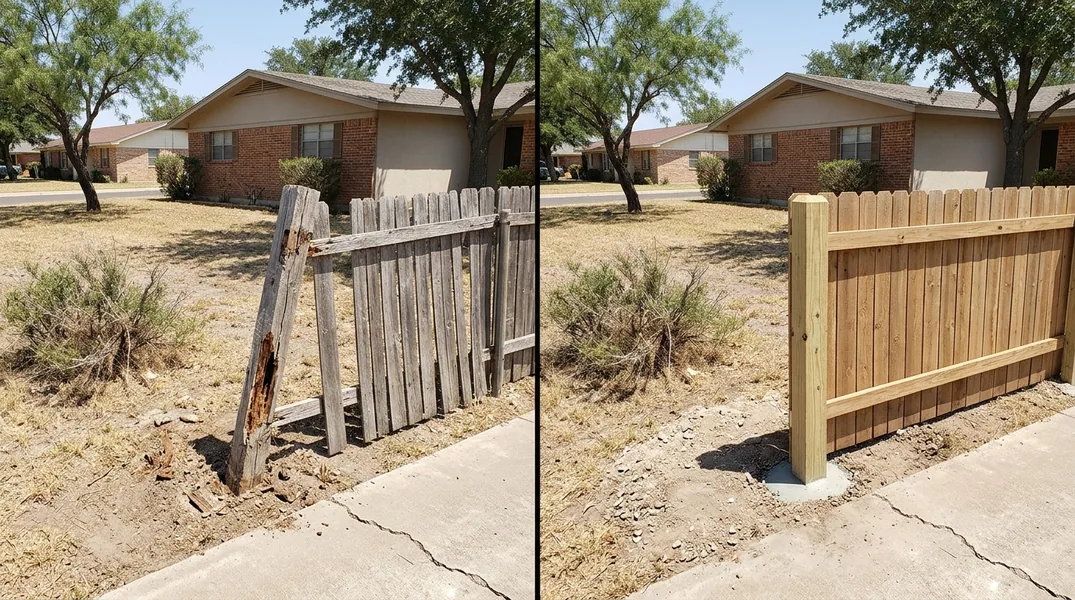
The Laredo Fence Problem: Why Your Fence Is Leaning
If you own a home in Laredo, you've probably noticed a fence or two that's started to lean. It's not just a cosmetic issue, and it's definitely not a sign of poor craftsmanship on every installation. The reality is that Laredo's unique soil composition, climate, and environmental factors create specific challenges for fence longevity that homeowners in other parts of Texas simply don't face.
A leaning fence is more than an eyesore. It's a structural warning sign that the foundation of your fence, particularly the posts, is compromised. Whether you installed a Wood & Privacy Fence Installation five years ago or ten years ago, understanding why your fence leans now will help you make the right decision about repair or replacement. The good news is that identifying the root cause is the first step toward a permanent solution.
Caliche Fence Posts: The Hidden Enemy in South Texas Soil
One of the most significant factors affecting fence stability in Laredo is caliche, a hard, cement-like layer of calcium carbonate that sits beneath the topsoil. Caliche is common throughout South Texas, and it presents a real problem for fence installation. When contractors dig post holes, they often hit caliche and either stop digging or drill through it. If the post doesn't go deep enough to pass through the caliche layer and reach stable soil below, the foundation becomes unstable.
Caliche creates a false sense of support. The post might feel secure initially because it's resting on this hard surface, but caliche doesn't provide true anchoring. Over time, especially after heavy rains or freeze-thaw cycles, the soil around the post shifts. The caliche can crack or settle unevenly, causing the post to shift and the fence to lean. This is why caliche fence posts require special attention during installation. Proper drilling through caliche, combined with concrete that extends below the caliche layer, is essential for long-term stability.
If your fence is leaning and you suspect caliche is the culprit, the solution often involves removing the affected posts and re-setting them properly. This is a specialized job that requires equipment designed to break through caliche and knowledge of local soil conditions. When you're ready to address the problem, reaching out for a free estimate from a local expert will help you understand the scope of the repair needed.
Termites and Wood Rot: When Your Fence Post Becomes Hollow
Termites are a year-round threat in South Texas, and they love wood fence posts. A rotted fence post repair often reveals that the damage started long before the fence began to lean. Subterranean termites work silently, tunneling through the wood from the inside out. By the time you notice the lean, the structural integrity of the post may already be severely compromised. The post might look solid on the surface, but inside, it's been hollowed out.
Wood rot accelerates termite damage and vice versa. When a fence post sits in soil that retains moisture, rot begins at the base where the wood meets the ground. This creates the perfect environment for termites to move in. As both termites and rot consume the wood, the post loses its strength. A post that should support hundreds of pounds of fencing material becomes brittle and weak. The fence then begins to shift and lean under its own weight or during windy conditions.
Prevention is always better than repair when it comes to termite damage. Treating wood with termite-resistant finishes and ensuring proper drainage around the base of posts can extend the life of your fence significantly. However, if you already have a leaning fence due to rotted fence post issues, replacement is usually the most practical solution. Trying to shore up a severely compromised post is temporary at best. A professional assessment will determine whether individual posts can be replaced or whether a more comprehensive repair is needed.
Shallow Posts and Installation Mistakes: The Foundation Problem
Not all fence leaning is caused by environmental factors. Sometimes, the problem traces back to how the fence was installed in the first place. Posts that are set too shallow are a common culprit. Building codes and best practices recommend that fence posts be set at least one-third of their length in the ground, with a minimum depth of 24 to 30 inches for most residential fencing. In areas with freeze-thaw cycles or heavy winds, deeper is better.
A post set only 12 or 18 inches deep might feel stable for the first year or two, but it won't hold up over time. Wind, soil movement, and the weight of the fence panels all work to destabilize a shallow post. As the post shifts slightly, the lean becomes more pronounced. Eventually, the entire section of fence can become compromised, affecting neighboring posts and panels.
If your fence was installed by a contractor who cut corners on post depth, you have options. You can have individual posts removed and reset to the proper depth, or you can reinforce existing posts by adding bracing or additional concrete around the base. The right approach depends on how many posts are affected and the overall condition of your fence. This is where professional guidance makes a real difference, so don't hesitate to contact Laredo Fence at (956) 394-2386 to discuss your specific situation.
How to Fix a Leaning Fence: Repair vs. Replacement
Once you've identified why your fence is leaning, the next question is how to fix it. The answer depends on several factors: how many posts are affected, the age and overall condition of the fence, and whether the lean is still progressing or has stabilized. For a single post that's leaning due to shallow installation, adding bracing or resetting that post might be sufficient. For multiple posts with caliche or termite damage, a more comprehensive approach may be necessary.
Minor leans can sometimes be corrected by adding diagonal bracing to affected sections. This reinforces the structure and can restore functionality, though it won't completely hide the lean. If you're planning to keep the fence long-term and want a clean appearance, replacement of the affected posts is often the better choice. Modern Wood & Privacy Fence Installation techniques, when done correctly, address the caliche and soil challenges specific to our area, resulting in a fence that will stand straight for years to come.
The cost of repair versus replacement varies. A single post replacement might run a few hundred dollars, while replacing multiple posts or sections could be more substantial. Understanding your pricing options upfront helps you budget appropriately. Some homeowners choose to replace their fence with alternative materials like Vinyl & PVC Fence Installation, which eliminates termite and rot concerns entirely, though the initial investment is higher.
Preventing Future Fence Lean: Best Practices for Laredo Homeowners
The best cure for a leaning fence is prevention. If you're planning a new fence installation or are preparing to repair your current fence, understanding the local conditions will help you make decisions that lead to lasting results. Proper post depth is non-negotiable. In Laredo, posts should extend well below the caliche layer when possible, or be set deep enough in stable soil to resist movement. Concrete should be used generously and should extend below grade to prevent water from pooling around the base of the post.
Drainage is another critical factor. Ensure that soil around your fence posts slopes away from the fence to prevent water accumulation. Standing water accelerates both termite activity and wood rot. If your yard has poor drainage naturally, consider installing a simple drainage solution around your fence line. Additionally, applying a quality wood sealant or termite-resistant treatment to your fence posts before installation can add years to their lifespan.
Finally, regular inspection and maintenance go a long way. Walk your fence line every few months, especially after heavy rains or storms. Look for signs of leaning, soft spots in the wood, or insect activity. Catching problems early makes repairs less expensive and less disruptive. If you notice any issues developing, reach out to Laredo Fence at (956) 394-2386 for an evaluation. We understand the unique challenges that Laredo homeowners face, and we're here to help you maintain a fence that's both beautiful and structurally sound for years to come.
Looking for a professional fence contractor in Laredo? Laredo Fence responds fast for all your fence needs.
Get a Free Quote